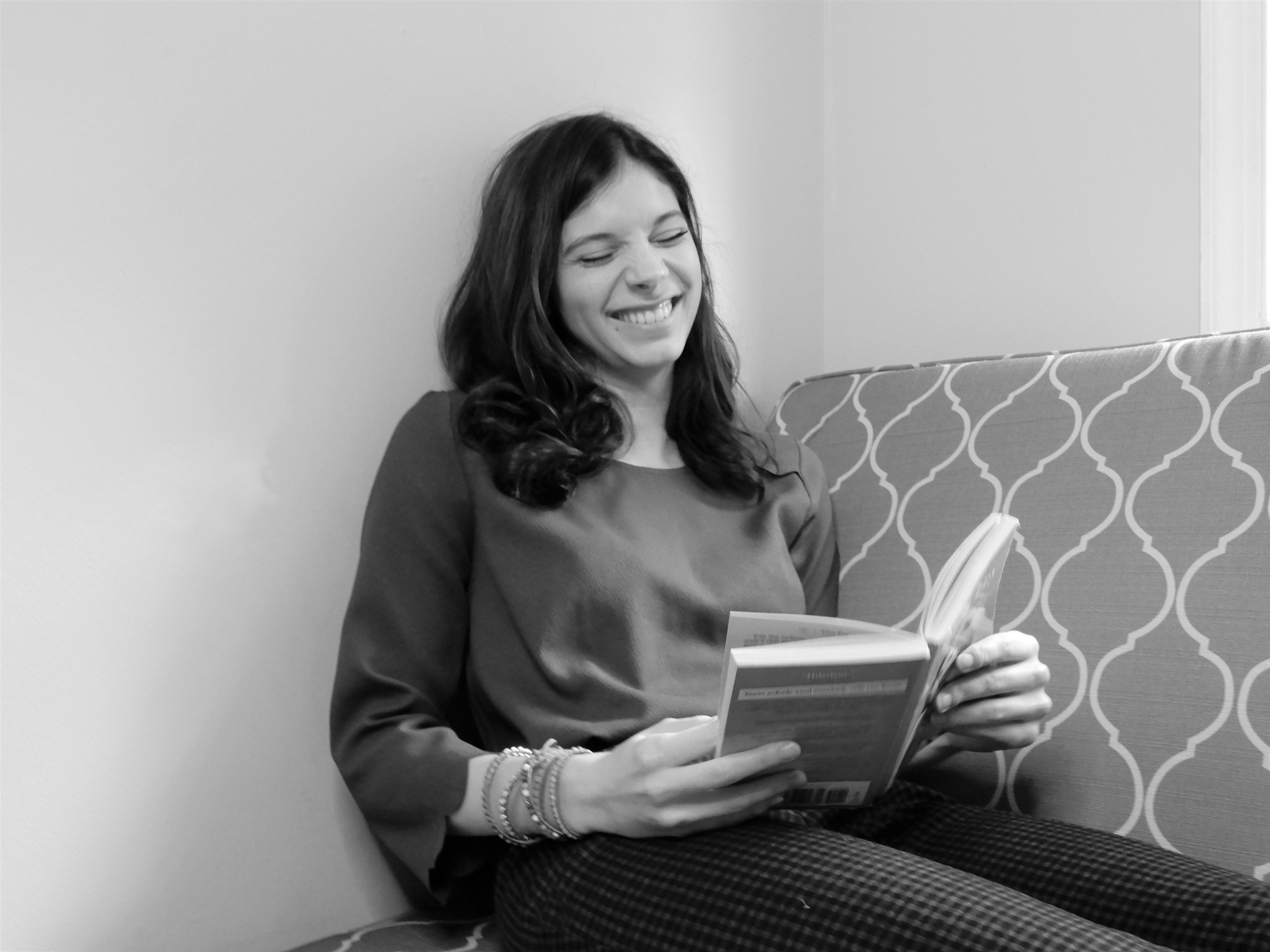
“When I look back, I am so impressed again with the life-giving power of literature. If I were a young person today, trying to gain a sense of myself in the world, I would do that again by reading, just as I did when I was young.”
– Maya Angelou
My whole life I have loved to read.
I live the cliché–books are my escape, my education, my happiness.
From beginning high school to all throughout college, I read books nonstop; however, they were mostly books that were assigned by my teachers. I didn’t even read my own book choices during college summers because I would read the books on my syllabus for the coming year…I know I had a problem 🙂
After graduating college, a whole new world stood in front of me. A world without syllabi.
A world where I could choose my own reading material.
I began reading for fun again and fell back into the rhythm where reading is my bliss. I decided to do some research to determine how reading can improve mental health. I was not surprised as much as I was validated by what I learned.
Learning about the positive impacts reading can have on a person’s mental health connected the dots for me. Check out below to see what I mean!
Mental Health:
Discussions about mental health are more prominent within modern society than ever before. The most recent addition being Simone Biles’ decision to not compete in various competitions while at the Tokyo 2021 summer Olympic games due to her mental health.
“I have to put my pride aside. I have to do what’s right for me and focus on my mental health and not jeopardize my health and well-being. That’s why I decided to take a step back.”
–SImone Biles

Biles decided she needed to listen to her mental health in order to protect herself. Her decision reignited the discussion about the validity of mental health.
According to the ADAA or the Anxiety and Depression Association of America, over 40 million people in the United States experience anxiety any given year. That total is 18% of the United States’ adult population.
The ADAA also reports, “322 million people worldwide live with depression (WHO)”.
These statistics are staggering. Mental health should be and needs to be considered equally as important as physical health when evaluating a person’s wellbeing. Similar to physical ailments, mental health illnesses like depression and anxiety can alter a person’s everyday activities.

Someone who is experiencing anxiety or depression may avoid social outings, have panic attacks, have insomnia, lose interest in hobbies or passions, experience fatigue, have difficulty concentrating, lose their appetite, and more.
Anxiety in adults and children has increased with the COVID-19 pandemic. Mental health illnesses tend to be treated with a variety of methods for one person; treatment is not always one size fits all with mental health.
Click HERE for resources about COVID-19 pandemic anxiety and depression.
Personally, my anxiety worsened with the coronavirus pandemic. Thankfully, I do not have severe anxiety and it is not ever-present. Nevertheless, I have found some coping methods along the way, one being reading.
“It’s one of the greatest gifts that reading can give a person: easy access to peace inside, even when the world outside is in shambles.”
– Jennifer Williamson
How reading can benefit your mental health:
Reading is a great option for relieving anxiety and stress; however, it should not be considered a cure.
When I think of stress relief methods that work for me, I think of:
- Yoga
- Hiking
- Journaling
- Ceramics
- Dancing (Like in your kitchen type of dancing)
- Watching my favorite movies
- Reading
- Cuddling my dog
“According to a 2009 study conducted by the University of Sussex in the United Kingdom, reading can reduce stress levels by as much as 68 percent, even more than listening to music or going for a walk.”
–Huffpost
Most of these are typical stress relief tactics, including reading. I have always known reading helped my anxiety and general low mental health levels; however, I thought it was simply because I enjoy reading. I had no idea that reading is a treatment method used by mental health professionals until researching for this article!

Reading can help improve mental health because it acts as a distraction from prominent stressors and pushes a reader to think creatively. For instance, Dr. Lewis, the head researcher for the 2009 study from the University of Sussex stated,
“This is more than merely a distraction but an active engaging of the imagination, as the words on the printed page stimulate your creativity and cause you to enter what is essentially an altered state of consciousness.”
-Dr. Lewis
This altered state Dr. Lewis refers to can have a calming effect which is why many doctors use reading to help those hurting from stress, anxiety, and depression. Therapists and psychiatrists use a reading treatment called bibliotherapy.
Bibliotherapy uses literature in a therapeutic way to support a person’s mental health. It is used for anxiety, depression, trauma, addiction, grief, large life changes, and more. To learn more about bibliotherapy, check out this 2017 study!
A common side effect of depression, anxiety, stress, and other mental illnesses is insomnia or trouble sleeping. Doctors from the Mayo clinic recommend adding reading to your nightly routine to encourage relaxation and sleep.
“Create a relaxing bedtime ritual, such as taking a warm bath, reading or listening to soft music.”
–Mayo Clinic
My research is light, but it tells me that reading can’t hurt it only has the possibility to help.

Reading is a source of love, light, and life.
Doing this research taught me that reading has even more magical qualities than I imagined. I hope you enjoyed! Below are links to my resources if you are interested in reading the full articles/studies. If you love reading too, share your love in the comments below–I love seeing everyone’s stories!
“We read to know that we are not alone.”
-C.S. Lewis
Source list:
- Huffington Post
- This article cites this study
- Dr. David Lewis “Galaxy Stress Research,” Mindlab International, Sussex University (2009)
- Mayo Clinic
- European Journal of Public Health
- MR Gualano, F Bert, G Voglino, M Martorana, V Andriolo, R Siliquini, Effects of bibliotherapy on treating depression: a systematic review: Maria Rosaria Gualano, European Journal of Public Health, Volume 27, Issue suppl_3, November 2017, ckx186.244, https://doi.org/10.1093/eurpub/ckx186.244
- The ADAA
 Discover with Deanna